With everything that seems to be going on in the world right now, between conflict abroad and worries about energy security, now is a great time to have solar installed. But why, you might ask? Is it just me trying to sell you a solar system? No. Right now genuinely looks like a sweet spot, and here is why.
Energy prices
Energy prices have been creeping up, and have risen further on the back of conflict in the Middle East. It may get resolved in the next month or two, it may not. Either way, we could still be a couple of months away from further rises in energy costs.
And when energy prices rise, that does not just affect petrol, electricity and gas, it also affects the products. So we could be in a really good spot at the moment where the cost of batteries and inverters has not gone up yet as a result. It may simply be a case of that happening over the next month or two.
In July 2026, Ofgem have confirmed the energy price cap is going up 13%. So if you have solar installed before any possible material price increase, your payback period is effectively 13% quicker from the day the cap rises.
Payback periods
Over the years, with product prices coming down and efficiencies going up, payback periods have sat between seven and ten years in a domestic setting, and often much quicker in commercial settings.
Payback has got quicker again with the use of battery storage, where you store energy in the battery during the day and use it through the night, with any excess going to the grid. Just remember that if you want to sell back to the grid and you want a quality installation, you need to use an MCS accredited company that can offer the Smart Export Guarantee. Rates vary from supplier to supplier, so it is well worth shopping around.
Batteries
If you have been following the solar market over the last five or six years, you have probably seen how batteries have become an essential part of an installation, pushing self-consumption figures from 30 to 40% up to 70 to 80%. That shift is a big part of why payback has shortened.
Wondering what your roof could do?
Call Chris on 01823 212 770 for a free, no-obligation survey. We model the savings against your actual usage, not a national average.
Call for a Free SurveyRoof orientation
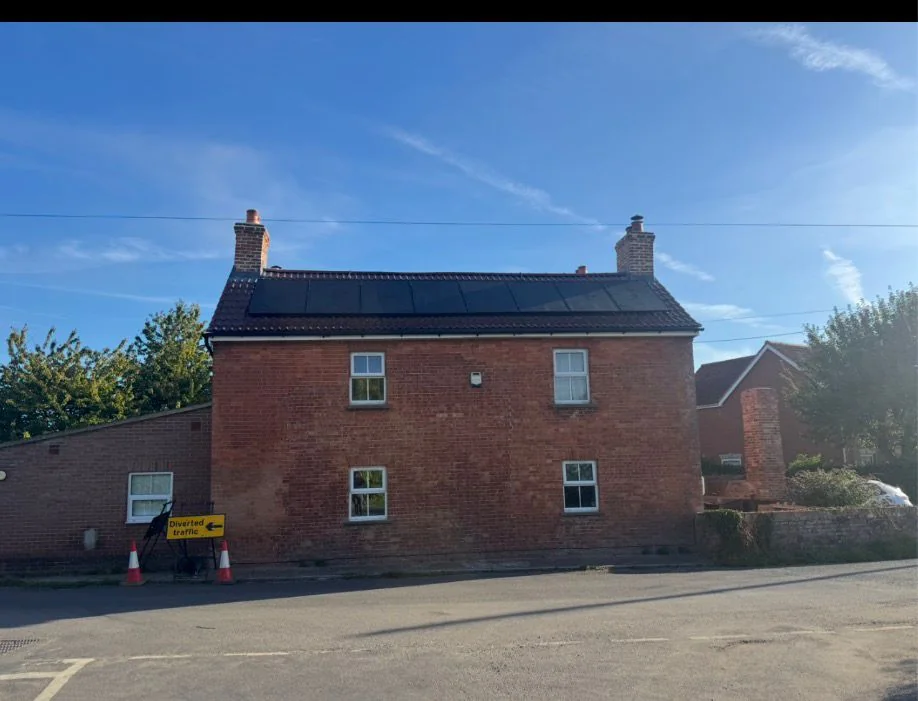
Just because your roof might not seem to have the perfect orientation for solar does not mean you cannot still make significant savings. If you have a south-facing roof, it can be surprising what an accompanying north-facing roof can add. North, east and west roofs all work effectively too.
In some cases, for high energy users, a battery-only system can be a major energy saver. That not only helps reduce your energy costs but can improve your EPC rating and your property value. There are plenty of articles online suggesting a better EPC band can be linked to mortgage rates and buyer appetite, so the benefit can reach beyond the bills.
Using an MCS accredited installer
As mentioned, you want to make sure you use an MCS accredited installer. Think of solar as a long-term hedge against rising energy prices. Every time energy prices go up, your payback period effectively gets shorter. MCS accreditation is also what unlocks the Smart Export Guarantee, so it matters for both quality and the money you get back.
EV chargers
Having an EV charger installed as part of your system can be a huge benefit and can really bring your payback period down, thanks to overnight EV tariffs where you could be charging your car at the same time as charging the home battery. These work particularly well in the winter months, and for people who have a battery-only system.
If you want to know anything more about your property, solar, batteries or EVs in general, feel free to reach out to anyone at Totum Renewables, whether that is on social media or by dropping us an email. We are here to help.
Frequently asked questions
Ofgem have confirmed the cap is rising 13% in July 2026. The higher the unit price you avoid, the more each kWh your panels generate is worth. Installing before the rise means the savings step up the moment the cap moves, which shortens your payback.
In a domestic setting, typically seven to ten years, and often quicker in commercial settings. Adding a battery and an off-peak EV tariff usually pulls that figure down further. We model your specific numbers on the survey rather than quoting a single headline figure.
Very often, yes. North, east and west roofs all work, and an east-west split spreads generation across the day, which can help self-consumption. For high energy users, a battery-only system can also deliver strong savings on its own. We will tell you honestly what your roof can do.
If you want to sell power back through the Smart Export Guarantee and you want a quality, properly certified installation, then yes. Totum Renewables is MCS accredited, so your system qualifies for SEG and comes with the paperwork that protects your investment.